The CPC31020 Certificate III in Solid Plastering is the professional standard for tradespeople who specialize in the “wet” side of the industry. Unlike drylining, solid plastering is a highly skilled craft that involves applying cement, lime, and gypsum-based plasters to create smooth, durable, and fire-resistant finishes.
If you have spent your career rendering external walls, creating decorative moldings, or restoring heritage facades, you already possess the expertise. In collaboration with our partner RTOs, we provide a streamlined pathway to turn those years of trowel time into a nationally recognized trade qualification.
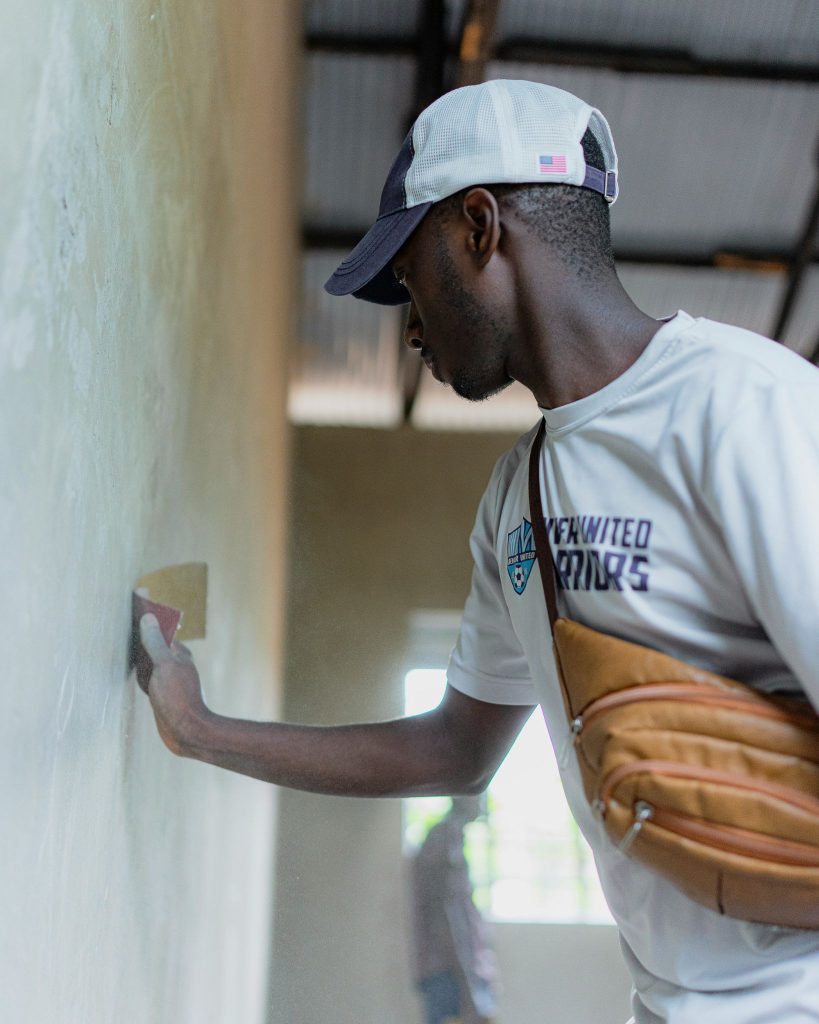
The Art and Science of Solid Plastering
Solid plastering is one of the most physically demanding and technically precise trades in construction. This qualification validates your understanding of how different mixtures react to various substrates, ensuring that the finishes you apply are built to last a lifetime.
Comprehensive Technical Competencies
To achieve the CPC31020, you must demonstrate mastery over a broad range of traditional and modern plastering techniques:
- Rendering Excellence: Applying sand and cement renders to external and internal brick, block, and concrete surfaces.
- Ornamental & Decorative Work: Creating and installing cornices, ceiling roses, and decorative plaster moldings—essential for high-end residential and heritage restoration work.
- Substrate Preparation: Assessing and preparing surfaces, including the installation of expanded metal lath (EML) and beads to ensure structural bonding.
- Specialized Finishes: Proficiency in applying various textures, including polished plaster (Venetian), pebble dashing, and acrylic-based thin-coat renders.
- Wet-Area Preparation: Applying waterproof membranes and cement rendering in bathrooms and kitchens to prepare for tiling.
- Restoration Skills: Understanding the unique requirements of heritage buildings, including the use of traditional lime-based mortars.
- Safety & Project Management: Managing WHS protocols, erecting restricted-height scaffolding, and reading complex architectural blueprints.
Why Solid Plasterers Choose This Pathway
- Pathway to Licensing: This certificate is a mandatory requirement in many Australian states for those applying for a Solid Plastering Contractor’s License.
- Increased Market Value: Solid plasterers are increasingly rare; holding a formal qualification allows you to charge premium rates for your specialized skills.
- Bridge the Gap: If you have worked overseas or in an uncertified capacity, this is the most efficient way to align your skills with the Australian Qualifications Framework (AQF).
- Portfolio-Based Assessment: We help you compile evidence—photos of your render work, videos of you running a cornice, and supervisor references—to prove your competency without needing to step foot in a classroom.
Long-Term Career Outcomes
The CPC31020 isn’t just a certificate; it’s a career foundation. Qualified solid plasterers can find success as:
- Qualified Solid Plasterer / Renderer
- Heritage Restoration Specialist
- Decorative Plastering Artisan
- Foreman or Site Supervisor
- Self-Employed Business Owner
Secure your future in a specialized trade. As the industry moves toward more sophisticated exterior cladding and high-end internal finishes, the demand for qualified solid plasterers has never been higher. Let us help you use your current experience to get the trade status you deserve through our trusted RTO network.